Showing posts with label Herodotus. Show all posts

Sunday, 2 February 2014

On the Significance of Animals


Did you know that animals have CHANGED THE FATE OF THE WESTERN WORLD AS WE KNOW IT? And I mean that in the historical sense, not the ecological sense. Obviously, megafauna or any fauna, in the dark annals of human past might have indeliably altered us. But we're not talking about evolution here, so back off biologists!


Croesus and the Camels

Croesus was king of Lydia, a Greek kingdom in Asia Minor, and his capital was Sardis. See the map below:
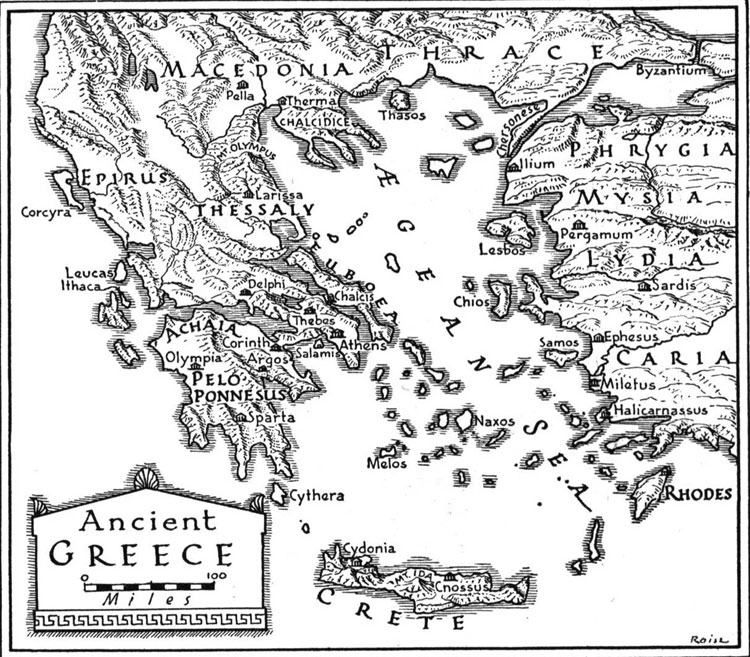
Unfortunately for him, he lived relatively close to the Persian Empire, which was rapidly expanding in this direction. He's the same Croesus you might remember from the SMBC comic. It was the end of the campaigning season, and he had just lost a close battle to Cyrus the Great, king of Persia. He decided to retreat to Sardis and send out envoys to request military aid for the following year. Little did he suspect, however, that Cyrus would ignore the rules of battle and march straight on Sardis! The Persians advanced so quickly and so suddenly that Cyrus himself (supposedly) could have announced their coming to Croesus. Croesus knew things looked bad, but he led his warriors out onto the plain. Herodotus says:
"In all Asia there was not at that time a braver or more warlike people. Their manner of fighting was on horseback; they carried long lances, and were clever in the management of their steeds"- 1.79

But Cyrus, or at least one of his advisors, Harpagus, was ready for him. He took the camels that were in his baggage train, and had their supplies removed. He mounted his own warriors on them as a kind of makeshift-cavelry and placed them in front of his other foot soldiers. Herodotus explains:
"The reason why Cyrus opposed his camels to the enemy's horse was because the horse has a natural dread of the camel, and cannot abide either the sight or the smell of that animal."- 1.80 
 This image is attributed to Harvey Dunn, 1928

This worked out perfectly for Cyrus. The Lydians' horses were terrified, and they were forced to fight on foot. However, they subsequently lost the battle, and the Persians were able to seige Sardis. Some more stuff happens, a couple of battles, a few letters to allies, but ultimately, the Persians won, Croesus lost, and his kingdom was subsumed into the Persian Empire. 


The Elephants and the...Pigs?

We all know elephants are afraid of mice, right? Wrong! In Roman times, elephants were said to be afraid of pigs, following this excellent anecdote.

Pyrrhus is one of the early threats to Rome. (He's also the origin of the term "Pyrrhic Victory" as in some of his battles he was victorious but at great cost to his own side.) He invaded the Italian peninsula and caused havoc in 280BC. His army consisted of thousands of soldiers and 20 war elephants. Pyrrhus defeated Rome at the Battle of Heraclia in what was basically a bloodbath. Estimates vary, but Hieronymous of Cardia says the Romans lost 7,000 while Pyrrhus lost 3,000; Dionysus claims the figures are 15,000 and 13,000. Since there are no ancient statistics (and anyone who says otherwise is lying or selling something), we can only assume that these represented big losses at the time, as the numbers were later so inflated. The Romans rejected his peace treaty, so he wintered in Campania, Italy, and defeated the Romans in the Battle of Asculum. For a miniature burn, Pyrrhus remarked of his own victory: "If we are victorious in one more battle with the Romans, we shall be utterly ruined" (Plutarch, Life of Pyrrhus 21.9).

The Romans were saved by a request from the Greeks in Sicily who wanted his help in driving out the Carthaginians. During his time on campaign there, the Romans were able to muster a new army, and in 275BC Pyrrhus found himself outnumbered at the Battle of  Beneventum. It is at this battle we get the anecdote from Claudius Aelianus. Pyrrhus' war elephants were still the most formidable of his forces, but "the beasts were halted at the gates when a flock of pigs were loosed upon them... as this was happening a bolt struck a calf, and it's mother panicked and ran to its aid, the other elephants pulled around her in cover,  as this was happening  the triarii debouched from a side gate and charged the elephants, setting the beasts once again into panic where they got stuck in the wooded hollow...."- Aelian, On the Characteristics of Animals

We aren't certain that this anecdote relates to this battle and not to another in the various campaigns. Indeed, we aren't certain it happened at all. Aelian wrote in the late second or early third century AD- about four hundred years later. Easily enough time for this myth to have done the rounds. 

In all Asia there was not at that time a braver or more warlike people. Their manner of fighting was on horseback; they carried long lances, and were clever in the management of their steeds. - See more at: http://www.iranchamber.com/history/herodotus/herodotus_history_book1.php#sthash.H4GubTXD.dpuf

Okay, you say, but these stories are highly allegorical. They were written about long after they supposedly happened, and have all the hall marks of a folk myth. There's no proof of any of this!

Oh yeah?* Check out these monetary bronze bars from Rome:

Yes, these were early Roman money from the 3rd century BC. It weighs five Roman pounds. We'll be hearing more about crazy Roman currency in a later blog.


*Okay, you're right. It's very tempting to link these with the story, but it's still not proof. In fact, it's not impossible that these bars were made after the myth had sprung up. The more I think about it, the more likely it seems.

Monday, 25 March 2013

Shit Oracles Say


This is my favourite SMBC comic. I'm sure you've seen it before, but just in case you haven't here is is again:


If you've never seen any of the SMBC comics before, you can read all of them here. But, err, read the rest of my blog first, yeah? You'll be there a while.

Anyway, I thought there were a couple of other amusing oracle stories that were worth sharing.

Sparta and the Tegeans

Once upon a time, the Spartans weren't the supreme military force we saw in 300. Way back in the 6th century BC, they were trying to conquer Tegea in Arcadia. Despite it's idyllic name, Arcadia was actually a pretty rough place, with few natural resources to speak of. First, they went and asked the Oracle what she thought about their plans. She told them:

"Cravest thou Arcady? Bold is thy craving. I shall not content it.
Many the men that in Arcady dwell, whose food is the acorn-
They will never allow thee. It is not I that am niggard.
I will give thee to dance in Tegea, with noisy foot-fall,
And with the measuring line mete out the glorious campaign."

They figured this was a pretty promising poem. It doesn't say they can have all of Arcadia, but it does let them take Tegea. And doesn't it say they'll dance- presumably with victory? And doesn't she also tell them they should even take surveying equipment (the measuring line) so they can measure up their conquered territory?

So, feeling confident, the Spartans set off, carrying with them fetters to bind the enslaved Tegeans. Unfortunately, they were roundly defeated, and many of them captured. Using the lines and chains the Spartans themselves had brought along, they were made slaves and forced to work the Arcadian soil. This became known as the Battle of the Fetters.

They went back to the Oracle and asked: what gives? Which god did they have to appease to be able to defeat the Tegeans? She answered them:

"Level and smooth is the plain where Arcadian Tegea standeth;
There two winds are ever, by strong necessity, blowing,
Counter-stroke answers stroke, and evil lies upon evil.
There all-teeming Earth doth harbour the son of Atrides;
Bring thou him to thy city, and then be Tegea's master."

The son of Atrides was Orestes, the son of Agamemnon. As you might imagine, it took them quite a long time to find the bones of a mythical hero. After all, doesn't one skeleton look much like another?

Fortunately, they happened to find them in Tegea itself (which gives them a mythical claim to the land, as Orestes was Spartan on his mother's side. That's probably the whole reason for this story.) Convenient that. A Spartan called Lichas heard a Tegean smith talking about digging a well in the middle of his forge. Apparently he found a coffin seven cubits long (that's about 3.2m), and, since he didn't believe the stories that said heroes were much taller than other men, he opened it up. There was a body the same size. He reburied it and figured that was the end of that. Lichas persuaded him to rent the room out, took it and secretly recovered the bones and returned them to Sparta.

"From henceforth, whenever the Spartans and the Tegeans made trial of each other's skill in arms, the Spartans always had greatly the advantage; and by the time to which we are now come they were masters of most of the Peloponnese.  "- Herodotus Histories book 1.

We don't know what happened to the bones after that, but they were probably interred in a temple and made into a hero cult.

But wait: people weren't ever three metres tall! What was it that Lichas found? Paul Cartledge reckons it was a fossilised dinosaur. Just when you thought they couldn't get any cooler, turns out the Spartans were worshipping dinosaurs.


Recall your Exiles!

Theagenes of Thasos was exactly the kind of jammy bastard we all secretly hate. He was a skilled athlete, excelling at every kind of physical contest. In total, he was supposed to have 1300 victor's crowns (equivalent to gold medals in major sporting events now). When he died, the people of Thasos put up a statue of him.

But there was one (unnamed) man who let his anger out: he hated Theagenes alive, and he hated him dead. In the middle of the night he would go out and mercilessly scourge (whip) the statue. One night, the statue put and end to this by falling on him and killing him. That should have been the end of it, but the dead man's sons prosecuted the statue for murder. They were successful (statues find it quite hard to speak up for themselves), the statue was condemned to exile and thrown into the harbour.

Soon afterwards there was a famine in Thasos, and so they went to the oracle to ask her what they should do. She gave them a standard reply: to recall their exiled citizens. Duly, they did so, but still the famine did not abate (I think you can see where this is going), so they went back. You know what she said?

"But you have forgotten your great Theagenes."

So, with a great deal of difficulty they managed to recover the statue, put it in its original position, and, for good measure, began worshipping it like a god.


Burns Throughout History #3

Since we've been discussing Sparta, here's a tiny quote from King Agesilaus when he was being shown around a city (probably Athens, but I don't have the name to hand). His guides drew his attention to the solid city-walls with their exceptionally strong construction, and he replied:

"What splendid woman's quarters!"


...burn. 

Saturday, 24 March 2012

Crazy Tales from Herodotus

We all know one. That girl or guy at the party who just can't stop telling you about all those amazing things they saw. They are completely credulous ('No, really, homoeopathy does work; I met an African shaman on my gap year, and they told me about the crystal energies, and how they channel your body's natural healing powers'), and no matter what you've done or seen, they've got an outlandish story to top it.

Guess what folks? Ancient history has one of them too. His name was Herodotus.


Who is this guy?

Herodotus was kicking around in 5th century BC Athens, though he was actually born in Halicarnassus, which is in modern day Turkey. Here is a picture of him.

 There are many, many library statues of Herodotus today.

He was the first person to gather together a 'history' in prose (if we include the Homeric epic poems as 'histories'), in a reasonably systematic manner. This was no mean feat, and probably the work of a lifetime. Herodotus supposedly travelled all over the Greek world, going to Egypt and Sythia and asking for their stories. Unfortunately, these claims are looking more and more tenuous as we learn more about these places from other sources.


What did he write about?

Herodotus claimed to be writing so that 'human events do not fade with time. May the great and wonderful deeds- some brought forth by Greeks, others by the barbarians- not go unsung; as well as the causes that led them to make war on each other' - proem, Histories. In practise, this was chiefly the Graeco-Persian Wars (you may remember them from such films as The 300 Spartans and 300).

However, 'Histories' in Greek means 'Enquiries', and as well as a history, Herodotus' work is also also ethnography, geography, zoology and general interest. Herodotus was actually very scrupulous by the standards of his day; but unfortuntely, our standards of what comprises history and myth have altered somewhat, and now poor Herodotus' work looks quite ridiculous indeed.


Here are some of his best* stories:

Kandaules and his wife (1.8-12)

Kandaules, king of Lydia, we are told, was a very lucky man indeed: he was in love with his wife, and he thought her the most beautiful woman in the world. All well and good. Unfortunately, he was pretty certain his bodyguard Gyges didn't really believe him about this. Naturally the solution was for Kandaules to arrange for Gyrges to spy on his wife while she was undressing, so that he would truly appreciate the wonder of her naked form. Yes, you did read that right.

Gyges initially refused, saying "I beg you not to ask for what is against all decency." But Kandaules was king, and he could have whatever he wanted, so the plan was arranged. Gyges got to play the peeping tom and agreed, she was really, really attractive. But the story doesn't end here. The queen found out about all this, and decided to take her revenge.


 Candaules, King of Lydia, Shews his Wife by Stealth to Gyges, One of his Ministers, As She Goes to Bed by William Etty.


So, in turn, she went to Gyges, and offered him a choice. He had seen her naked, which was a great dishonour. Either he must die, or must kill her husband (the king), marry her and become king himself. I think we all know what we would have done in that situation. Kandaules died, Gyges became king and about four generations later, the gods saw fit to punish his offspring. Seems legit.


Hippopotamus

Herodotus describes the hippopotamus, which he saw on his travels in Egypt. 'This animal has four legs, cloven hoofs like an ox, a snub nose, a horse's mane and tail, conspicuous tusks, a voice like a horse's neigh, and is about the size of a very large ox. Its hide is so thick and though that when dried it can be made into spear-shafts' - 2.73 Histories

Uh... yeah. Looks totally like a hippo.


There are several  schools of thought that say that Herodotus never actually went to Egypt. This is definitely in their favour. It is commonly thought that Herodotus took this description from Heceateus of Miletus, and probably neither of them ever saw a hippo, which were extinct in the Nile region by this time anyway. The only other description from Antiquity is the one from Job 40.10, which is equally bad.


Alexander, the Persians and a certain amount of cross-dressing (5.18- 5.21)

No, I didn't just fail on my history. Alexander the Great (who did go to Persia,  kill an awful lot of Persians, and began wearing something as effeminate as trousers) was Alexander III of Macedon. This was one of this predecessors, and only a prince when all this happened. Alexander the Great comes quite a bit later.

In the Graeco-Persian war, the Macedonians capitulated to Persia. Tactically, this was probably the best thing they could have done; had they fought back they would have been on their own (no Sparta or Athenian help; they weren't considered 'Greek' enough), and without any major defences or allies. As was the norm, King Darius of Persia asked for an offering of earth and water. The ageing king, Amyntas, agreed, and threw a large banquet to celebrate.

Only men were present at this banquet, as was the Macedonian custom, but the Persians demanded that women be brought out for them to admire. They claimed to be dazzled by the beauty of the women, and got pretty handsy.

Amyntas was pretty distressed about all this, and his son Alexander was livid. Alexander sent his father to bed (plausible deniability) and then set about getting even. He told the Persians he was sending the women out to bathe before sending them to bed with them (presumably without the women's consent). The Persians were incredibly drunk by this point. Alexander sent the women off and found some young men without beards, dressed them in women's clothing, and equipped each one with a dagger. He then sent them back in.

When the Persians tried to touch the new "women", they were set upon and all of them stabbed to death. Somehow, mostly by bribes, the inquest into this found no guilt on the part of the Macedonians.

This story is all very dubious indeed; it is far more likely to be a retrospective invention to justify their banquet with the Persians after the Greeks had been the victors.


*Note, there are many, many bizarre and amusing stories from Herodotus. If someone told you one that's not in this list, it's probably in there anyway. The only exception is the flying snakes, (bet Samuel L. Jackson would have loved those) which are commonly attributed to Herodotus but which are actually from Lucan.

Tuesday, 14 February 2012

UBU AGM: Athenian Democracy in Practice?

I'm sure most of you in Bristol attended, or heard about the AGM at Bristol Uni last week, but a quick recap for everyone else:

On Thursday of last week, (9/2/12), the University of Bristol Students' Union held their Annual General Meeting (AGM). This is a chance for students to propose motions about the things that affect and concern them; the chance to speak against motions that they think are a bad idea, and ultimately to vote on the things they'd like the Union to do in the next year. It is, notably, not when we elect officials; their campaigns are coming later.


A 19th century painting of the Athenian Assembly. 
Sadly, no-one at the AGM had so awesome a hat, but I may propose the Chair wear such a hat as a motion next year.


How could a bunch of students hope to imitate the practises of democratic Athens?


Attendance

The student AGM, like Athens, practises direct democracy. This means that every citizen, or member of the Students' Union is entitled to attend, and vote or abstain as they please. Most modern democracies, including Britain and the USA practise indirect democracy: we elect people to speak on our behalf at our assembly (or Parliament). However, there is nowhere near enough room in the Union Building, or the university, for all of the student body to be accommodated, if they chose to attend. Even 50% of the student body would present serious difficulties:  there are almost 20,000 of us. Therefore, attendance is merely those people who are interested, and not busy with something else, and usually with a vested interest. Are these people representative of the student body? How would we find out?

Athens may have been faced with similar problems. We do not have any exact population data for Athens (I'm afraid there are no ancient statistics. Anyone who tells you otherwise is wrong or lying), but there were almost certainly more Athenian citizens than students, and probably not enough space for them. Many citizens also owned land, and farmed it for a living; Athens was an agrarian economy, and very dependent on grain coming into the city. If you lived more than a day's walk from the city, you would probably only attend at important elections, or if you were in the city anyway, either fleeing the Spartans or coming to celebrate a festival.  As many modern day farmers will tell you, it's hard work, and leaves little time for politics.

However, the Greeks in general and the Athenians in particular were very, very keen on politics. While ignoring the AGM might (at worst) get you branded as 'apathetic', an Athenian would call you itiotes: a person not interested in politics. It is from this word that we get out modern 'idiot'. There is also a fun myth that slaves would walk through the streets with a cloth barrier dipped in red paint, herding the citizens to the assembly. Anyone with red on his toga ('...you've got a bit of red on you') would be shamed for the rest of the day.


Food

Obviously, you can't expect a bunch of students (or politicians) to attend a meeting without providing adequate refreshments. Athenians almost certainly brought food and drink to sustain them while they spent the day listening to grown men insulting each other, I mean, making serious speeches about things. And by 'drink' we should read 'wine': water was usually unsafe, and no-one thought of fruit juice unless you let it ferment
first.

 Incredibly ornate Greek wine mug. You probably wouldn't take something this nice to the Assembly.


At the AGM we were enticed in with pizza and drinks, and a local company thought to advertise themselves on top of cupcakes. I have no memory of the name on them,  but they were good cupcakes.

It seems plausible that voters were 'bribed' with food and drink; they certainly were in Roman elections a few centuries later. Many of the attendees would have been poor, with their citizenship status the only real difference between themselves and migrant workers, or worse: slaves. It is hard to imagine that Athenian politicians would fail to capitalise on this opportunity.


Speeches

All politics, it seems, rests on the powers of speech making. At the AGM, speakers were limited to two minutes. In Athens, it was a good deal longer than that, but still timed by water clock. It was considered the mark of a good statesman to speak exactly to time. Anyone who has read Thucydides or Herodotus knows just how many speeches there seemed to be, and how long they went on for. Often, you can imagine these speeches being spoken pretty much as they are by modern politicians. Demothenes' On the Crown and Pericles' Funeral Oration in Thucydides are good examples. Don't believe me? Go read them for yourself, and imagine David Cameron or Ed Milliband speaking.


'And furthermore, I refer my honoured colleague to the recent publication in The Times...'

The popularity or reputation of the speaker could often influence the vote, regardless of what was actually said. The same kind of behaviour appeared at the AGM: 'So and so is speaking against... I think I'll vote for.'


Voting

Voting at the AGM was done by remote control, and in a couple of minutes we had the results on the screen. In Athens, there were far too many people at full Assembly to vote by lot, so they did it by show of hands. Obviously, this meant that you could win a close vote by bribing the counting officials, who had to do it by eye. There were some things considered important enough to put to a secret ballot, however. The most famous was the Ostracism vote: all the citizens were asked to choose who they thought was best able to establish a tyranny (one man rule) over Athens. They would write his name down on a pot sherd (below) and then these would be counted. The person with the post votes was then exiled for ten years, to make sure that he couldn't establish this tyranny, but his property was not siezed by the state. When his term was up, he could return and reclaim his place in politics. 

Ostracon bearing the name 'Cimon' an Athenian statesman and possible Spartan sympathiser.

'Just because you don't take an interest in politics doesn't mean politics won't take an interest in you'- attributed to Pericles, Athenian leader, and (according to Thucydides) the greatest statesman that ever lived.
