Showing posts with label Animals. Show all posts

Wednesday, 12 February 2014

In Your Granary, Eating Your Grains

This may sound like a slightly boring topic, but I promise you it isn't. The question of how to store food from one harvest to the next has plagued humanity since the Neolithic (c. 10,000 BCE- the oldest granary ever found dates to 9000BCE in the Jordan Valley), and we've only had preservative techniques like canning and freezing in the Modern period (i.e. post-Medieval). And, of course, food supply is vital for the survival of human society, so how did ancient societies go about keeping their food safe?


Egyptians

We'll start with a pretty easy one. Egypt grew mostly grain. In general, the floodwaters of the Nile covered most of the farmland with silt every year, providing both water and nutrients to the soil. This allowed for (reasonably) reliable harvests, barring disease or faliure of the floodwaters. Grains were stored in granaries, as the name might suggest. Egyptian granaries looked like this:

A diagram showing the granary: three semi-oval shapes for storing grain above a doorway and two supporting arches. A person is almost the same height as the structure, for scale

Archaeological remains of two arches, which would have supported the granary floor 

A joke picture of Tattooine

If you remember your Bible stories/ Andrew Lloyd Webber musicals: Joseph told them to store up grain for a coming famine. They already did that, but I guess it was good advice anyway. With the climate being so dry, grains stayed edible for several years, and the shape of the granaries- raised but covered- helped create a preservative environment. Keeping them off the ground also made it harder for pests to invade the supply.

The Egyptians also had not-so-secret weapon: Cats. We all know that the Egyptians worshipped cats, and mummified them after they died, but one of the origins of this worship is thought to be their excellent pest-destroying activities. The local wildcats (from whom DNA suggests the Egyptians' cats were domesticated) killed not only rats and mice, but cobras and other poisonous snakes. Of course, this is pretty reductive; if simply killing vermin were enough to cause a culture to worship an animal, there would have been cat-cults all over Napoleonic ships and in every palace kitchen. Unfortunately, the origins of religions are obscure- this is the kind of thing cognitive science of religion is trying to deal with- and many of us in ancient history have stopped trying to search for the origin of religions. We usually don't get anywhere, and when we do we haven't actually learned anything new. Still: CATS.


Ancient Egyptian bronze statue of a reclining cat and kitten
Bronze statue of a cat and her kitten, Ancient Egypt (be more specific, won't you Wikipedia?)


Romans

The Romans did not have such a hospitable climate in much of their empire, especially not from Britain where our next example is from. Recognise this?
Oblong building remains with upright stones sticking up where the "floor" should be

No? Okay then, it's the granary from the Roman fort at Housesteads, on Hadrian's Wall. You'll notice that the floor is covered in square stones. Actually, it's not the floor; those stones would have held up a floor that no longer exists, allowing air to circulate beneath the grain. This helps prevent mould, as anyone living in a student house will know ("Just keep the window's open" "It's winter!" "If you don't keep the windows open, you'll get mould" "?!?!"). It may also have helped keep pests out, though it's unclear whether a foot or so was really enough.

Notice how thick the walls are? This granary (and the one next to it) had to feed the entire garrison from one harvest to the next (presumably- grain transport is tedious, so it makes sense to put it all in once place once it's been taxed off the locals and keep it there). They would pile literally tons of grain up against the walls, so they needed to be pretty sturdy.

Hang on a second!  Walls aren't waterproof! (This is true, actually. It's how damp gets into houses). Romans knew that too, so their granaries had extra wide eaves

A wooden shed in the rain. Water streams off the eaves which are far enough out that the walls are protected. 
This is not a Roman granary, it's a helpful visual aid

This kept water off the walls, and thus, the grain was saved!


Medieval

This one is by far the best and most interesting. As long as by "best" we mean MOST AWESOME. By Medieval times, barns were often massive affairs, intended to hold the tithe grain from large numbers of peasant farmers. They were simply too big to be raised up. If you've ever been into the Buckland Abbey tithe barn, you'll know what I'm talking about.
The inside of Buckland Abbey Tithe barn. High ceiling (maybe four metres), large open space with stone floor and stone walls.

The roof has been replaced, but the walls and floor are, to my knowledge, original.  

However, they had one, awesome and totally amazing innovation: owl chutes. This is a small hole or chute in the wall or roof of the granary which allows owls (most often barn owls) to enter the granary. The owls then find and eat the mice, preventing the mice from eating the grain!

(No, I'm not making this up) 

 
File:Owl Hole - Roughwood.JPG 


Burns Throughout History #8

This one is from a modern archaeologist, who mostly works on the European Iron Age (though he gets around a lot): Barry Cunliffe. You know what he once called Classical Archaeology?

"Text-assisted archaeology"

...burn.

Sunday, 2 February 2014

On the Significance of Animals


Did you know that animals have CHANGED THE FATE OF THE WESTERN WORLD AS WE KNOW IT? And I mean that in the historical sense, not the ecological sense. Obviously, megafauna or any fauna, in the dark annals of human past might have indeliably altered us. But we're not talking about evolution here, so back off biologists!


Croesus and the Camels

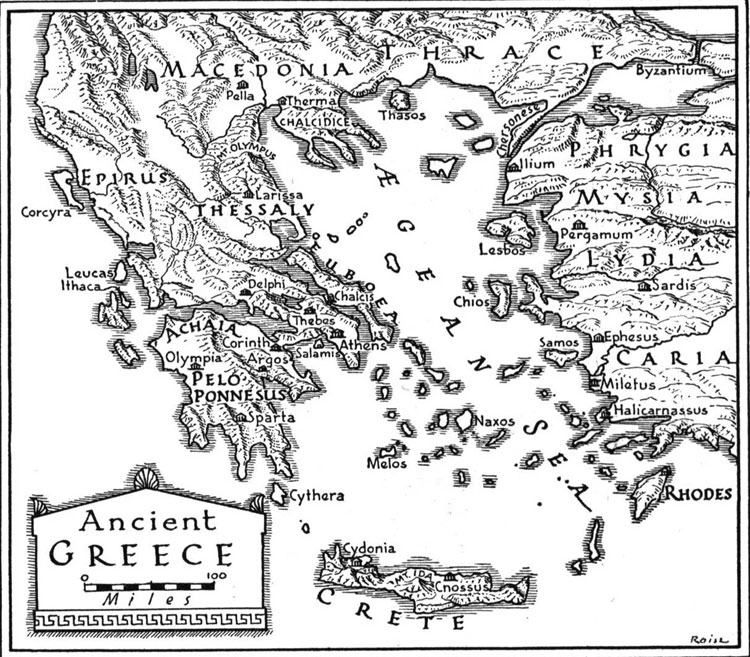
Croesus was king of Lydia, a Greek kingdom in Asia Minor, and his capital was Sardis. See the map below:

Unfortunately for him, he lived relatively close to the Persian Empire, which was rapidly expanding in this direction. He's the same Croesus you might remember from the SMBC comic. It was the end of the campaigning season, and he had just lost a close battle to Cyrus the Great, king of Persia. He decided to retreat to Sardis and send out envoys to request military aid for the following year. Little did he suspect, however, that Cyrus would ignore the rules of battle and march straight on Sardis! The Persians advanced so quickly and so suddenly that Cyrus himself (supposedly) could have announced their coming to Croesus. Croesus knew things looked bad, but he led his warriors out onto the plain. Herodotus says:
"In all Asia there was not at that time a braver or more warlike people. Their manner of fighting was on horseback; they carried long lances, and were clever in the management of their steeds"- 1.79

But Cyrus, or at least one of his advisors, Harpagus, was ready for him. He took the camels that were in his baggage train, and had their supplies removed. He mounted his own warriors on them as a kind of makeshift-cavelry and placed them in front of his other foot soldiers. Herodotus explains:
"The reason why Cyrus opposed his camels to the enemy's horse was because the horse has a natural dread of the camel, and cannot abide either the sight or the smell of that animal."- 1.80 
 This image is attributed to Harvey Dunn, 1928

This worked out perfectly for Cyrus. The Lydians' horses were terrified, and they were forced to fight on foot. However, they subsequently lost the battle, and the Persians were able to seige Sardis. Some more stuff happens, a couple of battles, a few letters to allies, but ultimately, the Persians won, Croesus lost, and his kingdom was subsumed into the Persian Empire. 


The Elephants and the...Pigs?

We all know elephants are afraid of mice, right? Wrong! In Roman times, elephants were said to be afraid of pigs, following this excellent anecdote.

Pyrrhus is one of the early threats to Rome. (He's also the origin of the term "Pyrrhic Victory" as in some of his battles he was victorious but at great cost to his own side.) He invaded the Italian peninsula and caused havoc in 280BC. His army consisted of thousands of soldiers and 20 war elephants. Pyrrhus defeated Rome at the Battle of Heraclia in what was basically a bloodbath. Estimates vary, but Hieronymous of Cardia says the Romans lost 7,000 while Pyrrhus lost 3,000; Dionysus claims the figures are 15,000 and 13,000. Since there are no ancient statistics (and anyone who says otherwise is lying or selling something), we can only assume that these represented big losses at the time, as the numbers were later so inflated. The Romans rejected his peace treaty, so he wintered in Campania, Italy, and defeated the Romans in the Battle of Asculum. For a miniature burn, Pyrrhus remarked of his own victory: "If we are victorious in one more battle with the Romans, we shall be utterly ruined" (Plutarch, Life of Pyrrhus 21.9).

The Romans were saved by a request from the Greeks in Sicily who wanted his help in driving out the Carthaginians. During his time on campaign there, the Romans were able to muster a new army, and in 275BC Pyrrhus found himself outnumbered at the Battle of  Beneventum. It is at this battle we get the anecdote from Claudius Aelianus. Pyrrhus' war elephants were still the most formidable of his forces, but "the beasts were halted at the gates when a flock of pigs were loosed upon them... as this was happening a bolt struck a calf, and it's mother panicked and ran to its aid, the other elephants pulled around her in cover,  as this was happening  the triarii debouched from a side gate and charged the elephants, setting the beasts once again into panic where they got stuck in the wooded hollow...."- Aelian, On the Characteristics of Animals

We aren't certain that this anecdote relates to this battle and not to another in the various campaigns. Indeed, we aren't certain it happened at all. Aelian wrote in the late second or early third century AD- about four hundred years later. Easily enough time for this myth to have done the rounds. 

In all Asia there was not at that time a braver or more warlike people. Their manner of fighting was on horseback; they carried long lances, and were clever in the management of their steeds. - See more at: http://www.iranchamber.com/history/herodotus/herodotus_history_book1.php#sthash.H4GubTXD.dpuf

Okay, you say, but these stories are highly allegorical. They were written about long after they supposedly happened, and have all the hall marks of a folk myth. There's no proof of any of this!

Oh yeah?* Check out these monetary bronze bars from Rome:

Yes, these were early Roman money from the 3rd century BC. It weighs five Roman pounds. We'll be hearing more about crazy Roman currency in a later blog.


*Okay, you're right. It's very tempting to link these with the story, but it's still not proof. In fact, it's not impossible that these bars were made after the myth had sprung up. The more I think about it, the more likely it seems.